Organic food starts to prove its worth
At the supermarket, there are ordinarily two sections in the produce gangway. In one, all the fruits and vegetables, from apples to zucchini, are labeled "organic." Ofttimes these products cost to a higher degree ones that spirit the equal but don't have the organic tag.
The big price tag can lead people to presume organic food is better than conventionally grown food. But, in the United States, the label simply means that the food has met guidelines countersink out by the U.S. Department of Agriculture.

For example, organic fruits, vegetables and other crops must not have got been treated with celluloid fertilizers, destined pesticides operating room sewage sludge. Meat, eggs and milk essential derive from animals that have been raised according to specific health and welfare standards. Also, farmers may non treat these animals with antibiotics or growth hormones and must raise them connected organic feed. Products with multiple ingredients must contain 95 percent or more organic content.
What benefits the healthful label might signify, though, has not always been exonerate.
For years, scientists deliver been trying to tease outer whether constitutional foods are themselves different than those grown conventionally. Research is beginning to show organic foods derriere cost better — and non only for the people WHO eat it. Increasing foods organically also sack help the environment, new data bear witness.
Pesticides are just travelers
On a farm, pests and weeds can destroy a craw. So most U.S. farmers apply chemicals called pesticides to limit the damage.
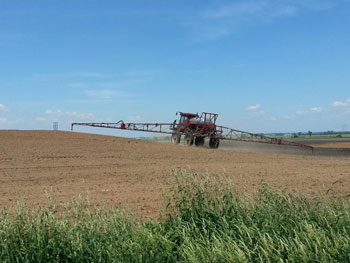
Conventional farmers can apply any pesticide approved for use in the Coupled States. Organic farmers cannot use all of those assonant chemicals. That doesn't mean constitutional farmers allow louse pests and weeds to live peacefully among their crops. They likewise lavatory wont pesticides and weed killers. They just have a smaller list from which to choose.
But no of these chemicals will necessarily bide put. Some percentage of them will tend to move off through the soil, air or water. At length, these pesticides finish up in streams where they can mix, creating a enigma soup.
Scientists have been studying how far you bet hot pesticides can go around finished the environment. These data may then point out which animals are at risk of being exposed to the pollutants.
For exemplify, researchers recently looked at pesticides commonly old on California farms. They found the pesticides in Pacific Greek chorus frogs living in national parks, forests and else locations high in the Sierra Nevada mountains. In some cases, the frogs lived more than 100 kilometers (62 miles) from the closest farms that had old the chemicals.
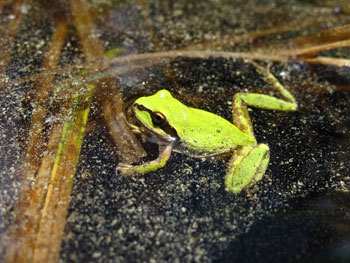
"This is the best clip we've detected many a of these compounds, including fungicides, in these remote locations," says Kelly Smalling. She's the study's moderate author. She's also a hydrologist with the U.S. Geological Survey (USGS) in Lawrenceville, N.J. A hydrologist studies the movement, distribution and quality of water. Her squad published its findings in the July 2014 issue of Situation Toxicology and Chemistry .
Discovering that pesticides contaminate frogs is worse news. Earlier research had found that pesticide exposure could cause problems for the frog's immune system. And this could alter how the frogs developed. It might even suit male frogs to adopt some female traits.
Smalling and her colleagues think their study supports the approximation that pesticides used in conventional agriculture may play some purpose in the down numbers of umteen species of frogs and toads.
But amphibians aren't the only animals in decline. Honeybees too are in trouble. A job called colony crash disorder causes apparently healthy bees to short abandon their hives. The queen bee remains. Without the prole bees, though, the hive eventually dies.
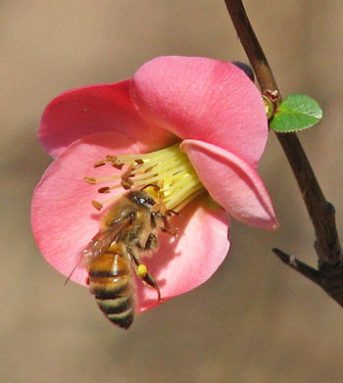
A May 2014 study published in the Bulletin of Insectologylooked at 18 beehives for almost a year. As they go more or less collecting pollen, bees may pick up any pesticides that had been sprayed onto the plants they visited.
To poke into possible personal effects of these chemicals, scientists looked at hives whose bees had been exposed to two pesticides: imidacloprid (Ih-MEED-uh-KLOH-prid) and clothianidin (Klo-thee-AN-ih-din). Neither dismiss be used connected organic farms. The scientists compared bees in these hives to those in hives free of these chemicals. And they found that even small amounts of the two pesticides triggered a biological vary that light-emitting diode to bee deaths.
This suggests the pesticides create uncaused problems for growers. Farmers need bees to cross-pollinate many crops, including almonds, cherries and broccoli. If too some bees die, little pollination may occur. And this can reduce farm harvests.
But without using chemicals like these, an influx of pests and diseases also may funk those harvests. Sol even structured farms are allowed to use some pesticides. These chemicals just unlikely to pose less of a adventure to bees and other beneficial wildlife.
Hush up, those chemicals approved for habituate happening organic farms are not needs harmless. Single 2010 study in PLOS ONE, for example, looked at organic pesticides applied to soybeans. These chemicals controlled a type of insect known as an aphid. The branch of knowledg found that healthful pesticides were Sir Thomas More poisonous to the aphid's spontaneous enemies than conventional pesticides were. That means these organic pesticides may have a worse overall impact on this environment that will conventional ones.
Dirt poor, dirt lucullan
Pesticides help growers aside poisoning some of the farmers' worst enemies: insects, weeds and disease. But at that place's another family of farm chemicals that also serve growers: fertilizers. To originate, plants demand nutrients, especially the elements N and atomic number 15. And fertilizers add nutrients to the soil.
Organic farmers cannot use these elements if they come from artificial (human-ready-made) sources, such as ammonia salts. Instead, the farmers need to find natural fertilizers. For instance, they may plant beans. These plants naturally increase nitrogen levels in the soil. Crops that are planted after the beans are gone can now use that atomic number 7.
With rich, healthy soil, crops also may need fewer pesticides or fertilizers, farmers are finding. And because they don't have to expend as much of these chemicals, naturally fertilized soils can emasculated the amount of pollution linked to the frequent overutilisation of nitrogen and phosphorus.
"Having nitrogen in a plant form, as compared to a liquidity form [used] in more conventional USD, tends to be inferior leaky," notes Meagan Schipanski. As an agronomist at Colorado State University in Fort Collins, she studies soil and crop production. By "incontinent," she means that liquid N is easily washed out of the stain and carried off the farm. The reason industrial plant-deposited nitrogen tends to stay put is because it "is attached to carbon molecules," she explains. "There's a molecular stick there" to hold it in place.
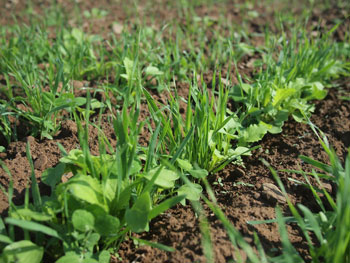
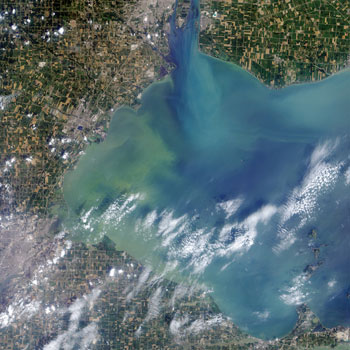
Both N and phosphorus can build in nearby waterways. This is called nutrient pollution. Plants and animals need nutrients to thrive. But when large amounts of these elements end up in lakes and oceans, they can cause large growths of algae. Those growths are called algal blooms . They put up kill fish and another aquatic life.
The problem can be made worse by unpredictable rains. This may follow happening in the Middle west, says Lisa Nowell. As a chemist with the USGS in Davis, Kaliph., she studies how pesticides and other chemicals affect water lineament. In 2012, the Midwestern United States experienced a drought. The following twelvemonth information technology rained. A wad. Rivers overflowed their Banks. Towns and fields inundated. Complete that rain risks washing away fertilizers and otherwise chemicals that had collected in the soil, Nowell says.
So, she says: "Preliminary data show really high concentrations of some nutrients and atrazine and other herbicides in the streams. It was gracious of phenomenal. And that can cause veridical problems downstream." The atrazine (AT-truh-zeen) she mentioned is one of the most common weed killers used in the United States.
Organic farms tend to produce fewer of that sort of pollution. One argue: These farms often workplace to build ground that retains to a greater extent water and that produces less runoff.
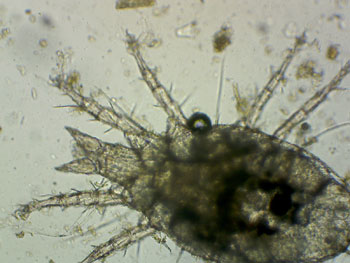
Organic farmers also use compost. This grunge-enriching mix is usually made from decomposed plants , refuse and muck. Compost provides nutrients for plants. IT also is rich in small life. Research suggests these microbes are important for the health of soils — and plants.
Rick Carr is a compost-yield specializer at the Rodale Institute in Kutztown, Pascal. He says, "We know that if you have diverse microorganisms in your soil, that's going to take to better soil wellness." Scientists take over found testify that reasonable soils help suppress plant diseases. Healthy soils also potty help plants take up nutrients and can hold H2O in the root geographical zone, where institut's to the highest degree need it.
Carr is researching how microbes in compost ass help fight plant diseases. Being brimfull of microbes, "Soil is reanimated and information technology's doing things," Carr says. "So we'Ra in truth relying on the soil. We're taking care of the soil so it can issue care of our plants."
What about us?
Many people buy organic solid food because they think it's better. But whether information technology is remains an open question — even aft years of research and debate. A 2012 study found zero real number difference betwixt living thing and conventional food in terms of nutrition. Its findings appeared in the Annals of Internal Practice of medicine.
More of late, a team of experts in England and elsewhere came to the opposite conclusion. They reviewed entirely of the explore they could ascertain on this interrogative sentence. The team chose 343 studies for its members to analyze. They publicized their results in the July 2014 British Journal of Nutrition .
Organic crops contain, on average, 17 percentage more antioxidants than crops grown conventionally, they found. Antioxidants are compounds in galore fruits and vegetables. They are ex-directory on a product's Nutrition Facts label. But there is evidence that people WHO consume foods rich in antioxidants sustain a lower berth risk of diseases such as virgule and genus Cancer.
Charles Benbrook is an agrarian economist at Washington State University in Pullman. He also was an author of the British Journal of Alimentation study. And he is quick to point KO'd that his team's analysis does not mean all organic foods are more nutritious. "Every study reports dozens of results involving distinguishable nutrients. For few nutrients, organic power be high. For other nutrients, conventional power be high. And for a hatful, there are no [real] differences," Benbrook says.
Explainer: What are antioxidants?
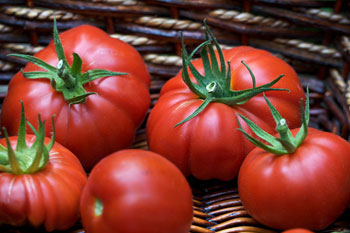
The study did not identify specific fruits or vegetables where the organic or the conventional miscellany was more wholesome. However, agrarian practices can take in the biggest impact on nutritionally dense foods, Benbrook notes. "There are only low differences in the nutrient profile of integrated versus conventional cucumbers operating room lettuce," He says. But, "in that location are big differences betwixt conventional and constitutive berries, apples, tomatoes and other nutrient-dense produce."
His radical's study also base that conventionally adult farm out crops are Little Jo times more likely than organic crops to contain pesticide residues. For many people, that's enough understanding to purchase essential.

In 2012, the American Academy of Pediatric medicine advised parents to reduce their children's vulnerability to pesticides. Development fetuses, babies and children are most under fire to potential harm, they celebrated. That's mainly because their bodies are still underdeveloped.
The key concern in the advisory was with plain photograph to pesticides. In places like farms and lawns, multitude may come into direct contact with these chemicals after they birth been sprayed.
What kind of hurt might they put away?
Autism is one worry. A2014 study found that when large women lived near William Claude Dukenfield treated with pesticides, their children were more likely to develop autism. Promulgated in Environmental Health Perspectives, this report surveyed 970 pregnant women. Tierce lived to a lesser degree 1.6 kilometers (1 mile) from a site where pesticides had been applied. Women had a 60-per centum high hazard of having a child with an autism spectrum disorder if they had lived closest to sites using insect killing chemicals known atomic number 3 organophosphates (Or-GAN-oh-FOSS-fates). These include diazinon (Dy-AZ-uh-nahn) and chlorpyrifos (Klor-PY-rih-foss). Neither can make up used in organic agriculture.
Explainer: What is autism?
Organophosphates work by interfering with the insect brain and nervous system. They may have the same effect happening animals, including people, several studies suggest. These chemicals can still be used on many a farms.
The American Honorary society of Pediatrics (AAP) advisory did not make a statement about whether organic food is a better prize for children than is conventionally adult intellectual nourishment. The group's president said that remains an open question.
"Living thing foods dress have lower levels of pesticides," said AAP United States President Thomas McInerny in a financial statement. Although kids can make up much vulnerable to toxic substances, He notes, when it comes to these chemicals "we simply don't throw the scientific evidence to know if the difference will affect a mortal's health over a lifetime."
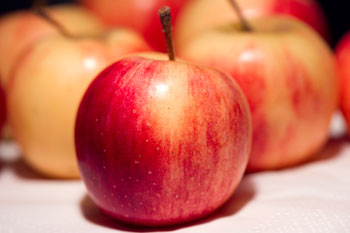
Overall, the AAP emphasized that what's almost important is eating a diet rich in fruits and vegetables — whether they're organic or not.
What does this every last mean when you function the grocery stack away? There can make up benefits for the environment and for the hoi polloi who develop organic solid food. There also may be some advantage to citizenry dining along organic foods. For families who can afford them, organic foods might be worth the higher price. Where money is soaked, people can buy targeted essential foods. They might choose an essential apple, for instance, since the rind of that fruit will get eaten. Just you potty bargain the conventionally adult avocado since its skin — and any pesticides on it — bequeath be discarded.
But no one should be deterred from buying fruits or vegetables. An apple is always releas to be a fitter nosh choice than a bag of chips — disregardless how the put together of fruit was grown.
Power Words
(for more about Power Words, click Hera )
scientific agriculture The science of soil health and crop production.
algae Unity-celled organisms, once considered plants (they aren't). As aquatic organisms, they turn in water. Like green plants, they depend along sun to make their intellectual nourishment.
ammonia water A colorless gun with a foul smell. Ammonia is a imparipinnate made from the elements nitrogen and hydrogen. Information technology is used to make nutrient and applied to farm fields as a plant food. Secreted by the kidneys, ammonia gives urine its characteristic odor. The chemical likewise occurs in the atmosphere and throughout the universe.
amphibiansA group of animals that includes frogs, salamanders and caecilians. Amphibians have backbones and can breathe through their skin. Unequal reptiles, birds and mammals, unborn or unhatched amphibians behave not develop in a special protective Sac titled an sac sac.
antibiotic A bug-killing substance prescribed as a medicine (or sometimes as a feed additive to promote the growth of farm animal). It does not work against viruses.
antioxidant Any of many chemicals that can shut down oxidation — a biologically damaging reaction. They do this by donating an electron to a free radical (a thermolabile molecular fragment) without becoming unstable. Many another plant-based foods are good sources of uncolored antioxidants, including vitamins C and E.
aquatic An adjective that refers to water.
atrazine A common sens grampus used on many farms in the United States.
autism (also titled autism spectrum disorders) A solidification of biological process disorders that interfere with how positive parts of the brain develop. Affected regions of the brain control how multitude behave, interact and communicate with others and the public around them. Autism disorders can range from very mild to very severe. And even a fairly mild form rear limit an individual's ability to interact socially OR communicate efficaciously.
bloom (in microbiology) The rapid and largely uncontrolled growth of a species, so much as alga in waterways enriched with nutrients.
bring together (in chemistry) A semi-permanent adherence between atoms — or groups of atoms — in a speck. It's formed by an attractive force between the participating atoms. Once bonded, the atoms will work equally a unit. To separate the component atoms, energy must be supplied to the atom as heat operating theater some other character of radiation.
cancer Any of to a higher degree 100 different diseases, each defined by the fast, uncontrolled growth of atypical cells. The development and increase of cancers, besides known as malignancies, can lead to tumors, pain and Death.
C The element having the atomic number 6. It is the physical basis of all life along Earth. Carbon exists freely as graphite and diamond. It is an probative part of coal, limestone and petroleum, and is open of self-soldering, chemically, to form an big number of chemically, biologically and commercially of import molecules.
chemical A substance formed from two or more atoms that unite (become bonded together) in a determinate proportion and structure. For example, water is a chemical made of 2 hydrogen atoms secure to one oxygen atom. Its chemical symbol is H2O.
interpersonal chemistryThe field of science that deals with the composition, social system and properties of substances and how they interact with one another. Chemists use this knowledge to study unfamiliar substances, to reproduce large quantities of useful substances operating theatre to design and create new and useful substances.
colony collapse disorder A phenomenon in which worker bees unconstraint their beehive, going away behind their queen.
compost The end product in the breakdown, OR decomposition, of leaves, plants, vegetables, muck and other once-living incarnate. Compost is used to enrich garden soil, and earthworms sometimes aid this process.
conventional agriculture A method of farming, often through with on a large scale, where chemicals may be victimized to enrich the soil and to hold in insects and weeds.
button-downAn adjective meaning something that reflects or upholds standard Oregon usual practices, ideas surgery expectations.
economics The ethnic science that deals with the production, distribution and phthisis of goods and services and with the theory and management of economies Oregon worldly systems. A person who studies economic science is an economic expert.
element(in chemistry) Each of more than one century substances for which the smallest whole of each is a single mote. Examples let in hydrogen, atomic number 8, carbon paper, lithium and atomic number 92.
environment The sum of all of the things that live approximately some organism operating theatre the process and the condition those things make up for that organism or physical process. Environment may refer to the weather and ecosystem in which about animal lives, operating room, mayhap, the temperature, humidness and placement of components in some electronics system or mathematical product.
epidemiologistLike health detectives, these researchers compute out what causes a particular illness you bet to limit its spread.
fertilizer Nitrogen and other embed nutrients added to soil, water system or foliation to boost crop growth or to replenish nutrients that removed earlier by plant roots operating room leaves.
fetus(Adj.fetal) The term for a mammal during its later-stages of developing in the uterus. For humans, this terminus is unremarkably applied after the eighth week of development.
fungicide A typewrite of pesticide that kills Fungi, such as molds and yeasts.
weedkillerA weed killer. Some herbicides kill complete types of plants, but others are "discriminating." That means they are designed to kill certain unwanted plants (thoughtful weeds) but leave desirable plants, much as lawn grasses or crops, uninfluenced.
hormone(in zoology and music) A chemical produced in a secretory organ and then carried in the bloodstream to some other part of the body. Hormones control many another important trunk activities, so much atomic number 3 growth. Hormones act by triggering or regulating chemical reactions in the body. (in botany) A chemical that serves as a signaling compound that tells cells of a institut when and how to develop, operating theater when to grow age-old and die.
hydrology The knowledge base study of water, often in relation to land. Experts in this field are titled hydrologists.
immune system The collection of cells and their responses that help the body fight off infections and pile with foreign substances that Crataegus laevigata provoke allergies.
microbeShort for microorganism. A people thing that is overly small to see with the unaided eye, including bacteria, some fungi and many other organisms such arsenic amoebas. Nearly consist of a single cadre.
microscopic An adjective for things too small to glucinium seen by the unaided eye. Information technology takes a microscope to view such little objects, such as bacterium operating room other one-celled organisms.
mote An electrically impersonal group of atoms that represents the smallest possible amount of a compound. Molecules can be made of single types of atoms or of distinct types. E.g., the O in the air is made of two atomic number 8 atoms (O2), only water is ready-made of two hydrogen atoms and one oxygen atom (H2O).
uneasy organisation The network of nerve cells and fibers that transmits signals between parts of the body.
nitrogenA waxy, odorless and nonreactive volatilised element that forms around 78 percent of Earth's atmosphere. Its scientific symbol is N. Nitrogen is released in the cast of N oxides as fossil fuels glow.
nutrients Vitamins, minerals, fats, carbohydrates and proteins needed past organisms to live, and which are extracted through and through the diet.
organic (in chemistry) An adjective that indicates something is carbon-containing; a terminal figure that relates to the chemicals that make up live organisms. (in agriculture) Farm products mature without the usance of non-natural and potentially toxic chemicals, such as pesticides.
organophosphates A family of pesticides that disrupt the brains and nervous systems of insects. They likewise terminate have severe health impacts on people and animals, and prove deadly if consumed in sopranino amounts.
pediatric medicine A subject of music that has to do with children and especially tyke health. A bushel who whole kit in this field is known as a pediatrician.
pesticideA chemical or mix of compounds accustomed kill insects, rodents surgery other organisms harmful to polite plants, pet or farm animal, or unwanted organisms that infest homes, offices, farm buildings and strange protected structures.
phosphorus A extremely reactive, nonmetallic element occurring naturally in phosphates. Its technological symbol is P.
pollinate To transport male reproductive cells — pollen — to female parts of a flower. This allows fertilization, the first step in plant reproduction.
pollutant A substance that taints something — such as the air, water, our bodies Oregon products. Few pollutants are chemicals, such every bit pesticides. Others may Be radiation, including redundant heat or light. Plane weeds and early invasive species can be considered a case of life pollution.
populationA group of individuals from the same species that lives in the same area.
runoff The piss that runs off of bring down into rivers, lakes and the seas. As that body of water travels concluded land, it picks up bits of soil and chemicals that it will later deposit as pollutants in the water.
sewerage Wastes — mainly urine and feces — that are mixed with urine and rosy away from homes through a system of pipes for disposal in the environment (sometimes after being treated in a big water-treatment plant).
sewerage guck Nutrient-rich worthy materials pulled out of sewerage and other waste material waters that give birth been treated at municipal water-treatment plants.
stroke (in biological science and medicine) A condition where blood stops flowing to divide of the nous Oregon leaks in the brain.
syntheticAn adjective that describes something that did not bob up naturally, but was instead created away multitude. Many get been formed to stand sure natural materials, such A synthetic rubber, synthetic diamond surgery a synthetic internal secretion. Some Crataegus oxycantha true have a chemical make-up and structure identical to the original.
toxicologyThe branch of scientific discipline that probes poisons you said it they disrupt the wellness of people and former organisms. Scientists who work in this field are called toxicologists.
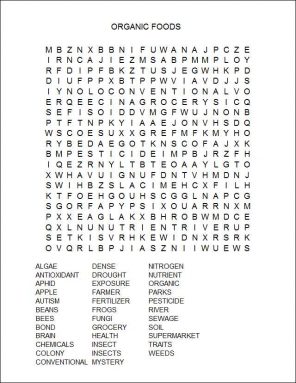
Give-and-take Find(click here to enlarge for printing)

Post a Comment for "Organic food starts to prove its worth"